Friday, November 30, 2018

I Never Knew Their Names

Nesse Godin, a Holocaust survivor, says she made it through those dark days of  human history not on her own strength or wisdom, but by the kindness of Jewish women, the women who helped her.  Then she writes:  “I never knew their names.”  I never knew Nesse Godin’s name until a year or so ago.

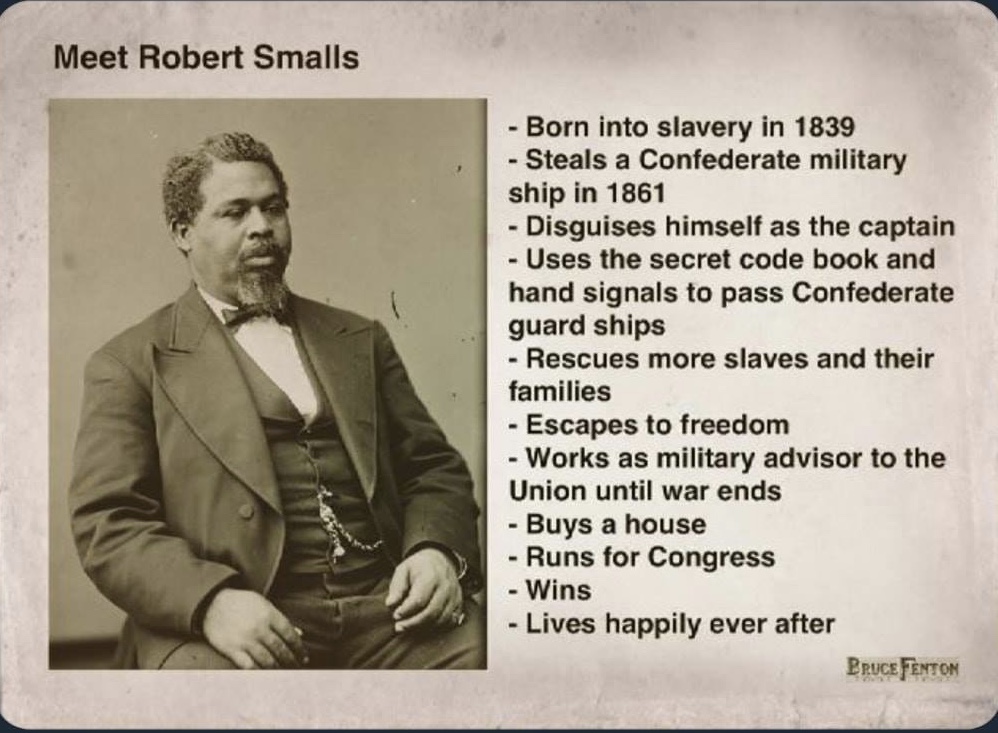
I never knew Robert Small’s name until yesterday.  A friend posted Robert’s story on Facebook.  He was born into slavery in 1839.  He was able to steal a Confederate military ship in 1861 and escape to freedom.  After the war he purchased his former owner’s house in Beaufort, South Carolina.  He ran for Congress and won.  What a fellow!  And I never knew his name.

I never knew Kirk Bloodsworth’s name until recently when I read his story in the book, Bloodsworth.  Kirk Bloodsworth grew up in Cambridge, Maryland among the watermen on the Eastern Shore. He served four years in the Marine Corps.  In 1984, at the age of 22, he was convicted of the rape and murder of a nine-year-old girl and sentenced to death.  Kirk spent nine years in prison and two years  on death row before being exonerated and pardoned in 1993 as a result of DNA testing.  And I never knew his name.

Robert Small wasn’t perfect.  He was accused of taking a $5,000 bribe while serving as a South Carolina senator.  In 1877 he was convicted of the offense and sentenced to three years in prison (though released pending his appeal and later pardoned by the governor).  Kirk Bloodsworth wasn’t a perfect guy and wandered off into a “far country” after his stint with the Marines. 

I never knew their names.  But I know Robert’s name and Kirk’s name now and my little life is enlarged by the knowing.  Elie Wiesel writes, “In Jewish history, a name has its own history and its own memory.  It connects beings with their origins.”  So also,  my knowing the name of another person and thus knowing a little of their story is to tread on   sacred ground.  It is no accident that Isaiah has God say:  “I have called you by name, you are mine.”  In some mysterious way when I come to know the names of Robert Small and Kirk Bloodsworth, they become a part of my history, my memory, my community.  I never knew their names until just recently!


Thursday, November 29, 2018

My Gut Feeling

On Tuesday, Donald Trump gave an interview to The Washington Post—a source of “real news,” I assume.  He castigated the Federal Reserve Chairman,  “Jay” Powell, whom he appointed.  “I’m doing deals, and I’m not being accommodated  by the Fed,” he complained, “They’re making a mistake because I have a gut, and my gut tells me more sometimes than anybody else’s brain can ever tell me.” 

Note:  The Federal Reserve System, by law,  is not supposed to accommodate the whims of the President of the United States.  “The Fed” is the central banking system of the United States.   It was created by Congress in 1913 after a series of financial panics.

Trump thinks his gut is smarter than anybody else’s brain and his brain (intelligence) is smarter than all the scientists who say that man-made climate change is a reality.

“One of the problems that a lot of people like myself, we have very high levels of intelligence but we’re not necessarily such believers,” Trump said in the interview.  “You look at our air and our water, and it’s right now at a record clean.”  He went on to say, “As to whether or not it’s man-made and whether or not the effects that you’re talking about are there, I don’t see it.”

What planet does Mr. Trump live on?  The world is on the verge of a water crisis.  Hundreds of cities and towns in the United States are suffering severe water shortages, either because available water is not safe to drink or because there is not enough water.  The U.S. Office of the Director of National Intelligence  now ranks water scarcity as a major threat to our national security alongside terrorism.  Flint, Michigan, where the water supply has been rendered undrinkable is just a preview of what is to come.  The fires in California threaten air quality.  The red tide in Florida is killing marine life.  This  is not Fake News!  Surely with such a brilliant gut and a “very high level of intelligence” Donald Trump should be able to see this!  Why, even the Office of the Director of National Intelligence sees it.

But then, Mr. Trump’s gut is so much smarter, his intellect so much higher, that he doesn’t believe our national intelligence agencies.  He disputes the CIA’s assessment about the murder of journalist Khashoggi by Crown Prince Mohammad bin Salman.  “Maybe he did and maybe he didn’t.  But he denies it.  And people around him deny it.  And the CIA did not say affirmatively he did it, either, by the way.  I’m not saying that they’re saying he didn’t do it, but they didn’t say it affirmatively.” 


What does your gut tell you?  My gut feeling is that I don’t trust the Trump gut any more than I trust my own.  


What do you see?


Wednesday, November 28, 2018

What About the Constitution?

In a Thanksgiving Day tweet, Trump once again berated the U.S. Court of Appeals of the Ninth Circuit saying, “We want the Constitution as written.” Earlier in the week he called the 9th circuit “a lawless disgrace,”  (this comment came after a federal judge ordered the administration to resume accepting asylum claims from migrants no matter where or how they entered the United States).  Trump’s tirade about an “Obama judge” brought Chief Justice John Roberts into the fray saying, “We do not have Obama judges, Trump judges, Bush judges or Clinton judges…The independent judiciary is something we should all be grateful for.”  Is the judiciary as independent as Roberts’ claims, or has it become political? The many 5-4 rulings by the Supreme Court makes one wonder about Roberts’ claim of impartiality.  The recent battle over Justice Kavanaugh’s confirmation speaks volumes on this subject.

The Constitution is seen as the “bible” for our democracy.  Just as there are different philosophies of interpretation for the Bible among religious folk, so there are different philosophies of interpretation for the Constitution.  What does Mr. Trump mean when he says, “We want the Constitution as written?”  A “strict construction” interpretation of the Constitution tries to adhere to the literal words of the document.  “Originalism” is yet another philosophy of interpretation that tries to interpret the Constitution according to the intent of those who wrote it. Then, there is the “loose construction” philosophy of interpretation that believes the Constitution was intended to be a living document interpreted by each new generation.  Each member of the judiciary has his or her own philosophy of interpretation and acts accordingly.  Is this being impartial?  I think so.   Is this being independent?  Yes, I think so.  Does this mean there are Obama, Trump, Bush or Clinton judges?  No, it means there are various philosophies of interpretation and each justice has chosen his or her philosophy long before being appointed to a federal bench.  


The issue becomes complicated when we begin to suggest that there is only “one way” to interpret the Constitution.  Some say they believe in the literal interpretation of the Bible, that they want the Bible as written—the  Bible that says in Psalm 137:9: “Blessed shall he be who takes your little ones and dashes them against the rock!”  Thurgood Marshall said in response to the adoration of the  “…Constitution as written,” that it was “defective from the start, requiring several amendments, a civil war, and major social transformations to attain the system of constitutional government and its respect for the freedoms and individual rights, we hold as fundamental today.”  How we interpret the Bible and how we interpret the Constitution makes a world of difference in how we view people.


Tuesday, November 27, 2018

Judgment

To judge or criticize another person is an easy thing to do and most of us are quite good at it.    To judge or criticize another person, however, is also always dangerous.  It is always a potential boomerang:  “For with the judgment you pronounce you will be judged” (Matthew 7:2).  Some say that Jesus forbade his followers to judge, but even a surface reading of the gospels indicates that Jesus himself judged.  In fact, the gospel, in and of itself, is a judgment, a criticism against the world as it is! In essence, Jesus’ teaching about judgment is not that he forbade it, but rather that it had serious implications.  If you don’t want to be criticized, don’t criticize. Every judgment you or I make involves a self-judgment.  We have to look to the plank in our own eye (and that plank exist in every human eye)—we have to realize how difficult a job it is to attempt to remove the speck we see in the eye of another.  

But what kind of life would we know if we did not make judgments?  What kind of world would it be if we did not criticize things that happen in it?  What kind of government would we have if we simply tolerated whatever that government did?  What kind of society would we be living in today if no one had ever judged and criticized it?  It seems to me that the very essence of Christianity is to take a stand, to judge, criticize, object,  and overturn whatever appears to be dehumanizing.  Slavery was wrong.  We made that judgment and fought a war to overcome it.  Segregation was wrong and we made a judgment and fought against it.  Women were not given right to vote until the early twentieth century.  That was wrong, and some made a judgment and  criticized, and that wrong was overturned. Do not use Jesus’ teaching to avoid making judgments or being critical.  Taking Jesus seriously is not some kind of mindless tolerance.  But we become mindlessly tolerant when we cease to be social critics, political critics, ethical critics and religious critics!  “Judge not, that ye be not judged” simply means that we are judged by the same “standards” by which we judge others.


Mr. Trump  has raised the possibility of starting “our own Worldwide Network” to smother the news spread by CNN internationally.  He said, just yesterday, that CNN “has a powerful voice portraying the United States in an unfair and false way.  Something has to be done.”  Mr. Trump criticizes and judges CNN without looking at himself and the “faux news” he spreads every day.  Mr. Trump wants a worldwide network “to show the World the way we really are.  GREAT!” I, unabashedly and unapologetically, judge such a proposal to be anathema to our democracy.  After all, there is already the Voice of America and BBC. If we don’t make judgments, or criticize, or object, our mindless tolerance will destroy all that we hold dear.


Monday, November 26, 2018

Trump’s Faux News


The French word “faux” means fake.  We’ve borrowed the word and use it in our English language to describe an “imitation” of something such as a “faux-fur coat.”  The word also has a number of synonyms:  imagined, pretended, make-believe, made-up, fantasized, dreamed-up, unreal, invented, fictitious, fake, sham, spurious, bogus, counterfeit, fraudulent, and phoney.  

“Faux pas” is another term borrowed from the French and widely used now in our English vocabulary.  Faux pas means literally “false step.”  Synonyms include words like: gaffe, indiscretion, mistake, impropriety, breach of etiquette, slip up, and blooper.  

Mr. Trump’s faux pas when in England in July 2018 comes to mind.  He messed up royally by walking in front of Queen Elizabeth II as they strolled the grounds of Windsor Castle. He also failed to bow when meeting the Queen and was twelve minutes late in arriving at the palace.  A  palace insider was quoted as saying, “The feeling inside the palace is that Trump’s disrespectful mistakes with the queen were terrible and inexcusable. The American president struggled with the simplest acts of courtesy and politeness, which did not go unnoticed by the world.” That’s just one  example of Mr.Trump’s faux pas (breach of etiquette, impropriety or indiscretion) moments.  He seems to be totally unaware.

Mr. Trump rambles on about “Fake News” while he himself continues to report spurious claims, bogus situations, and made-up stories—or, shall we say, “Faux News?” The talk about the caravan is but one example.  His faux news has no basis in fact and yet no one seems to care. I’m amazed as I read what some of his supporters write as “truth” on social media.  Much of it is bogus, fraudulent, unreal, invented out of thin air, and a sham.  But if Mr. Trump says it, repeats it over and over again, no matter how faux, no matter how bogus, they believe Trump’s  Faux News. 


Sunday, November 25, 2018

The World Before My Laptop

Woe is me!  My laptop is malfunctioning.  I spent an hour or more on the phone with the cable folk yesterday trying to resolve the problem.  That didn’t work.   A trip to the Apple Store will be the next step.  How can I manage without my laptop?  I’m wholly dependent on it.  I  do have an iPhone and an iPad, and they are both working okay (so far), but neither of these are adequate substitutes for my laptop.  Woe is me!

Once upon a time I lived in a world devoid of computers: desktops, laptops, iPhones, and tablets.   It really wasn’t that long ago, but long enough ago that I can barely remember it. Or maybe, I really don’t want to remember it.  It was a primitive time.  We wrote a lot by hand.  On paper.  Being left-handed, I remember having a hard time writing in “right-handed notebooks”.  I was somewhat relieved from that handwriting business when I learned how to type on a typewriter.  I could once type/write 60-some words a minute.  If I made a mistake I could raise the paper and erase the error, lower the paper and type in the correct word or letter.  Later on a “white out” liquid was available to make corrections.  It took longer to type a research paper without error than it did to do the research and to write the notes! 

It was a time of great innovation.  If one needed an extra copy when writing on the typewriter,  carbon paper and what was known as onion skin paper would do the trick.  If you made a mistake, it only took 3-5 minutes to erase each copy.  If more than a few copies were desired we used a mimeograph machine or a “ditto” machine. The mimeo used a messy black ink and the “ditto” (sometimes called the “spirit duplicator) used an alcohol-based fluid on which one could easily get a “high!”  Then came the Multilith or the Lithograph duplicating process.  Why, IBM even came out with an electric typewriter and later (way back in 1961) they developed the “Selectric”  with replaceable caps with different fonts.  What an amazing machine that was!

Back in the day there were no telephone answering machines, no GPS or Google maps (you had to know how to read a road map) and you had to change your telephone number every time you moved.  An address book was a physical thing, an actual notebook, in which you had to write the address by hand and update it in the same way.  There is so much more I could say about how things (from banking to buying) were done back then, but space does not allow it.

Believe me, this is a very limited overview of that primitive time. Some people suggest it was a better time than the present.  I disagree.  It was a world without a laptop.  I prefer to live in a better world with my laptop. 


Saturday, November 24, 2018

Abiding Love

Arnold Toynbee wrote:  “Love is the ultimate force that makes for the saving choice of life and good against the damning choice of death and evil.  Therefore the first hope in our inventory must be our hope that love is going to have the last word.”  I choose love.  I  believe love will win out, that it will have the last word, because Love is at the Heart of Things. 

In the present darkness (and it is darkness) we must not despair.  Despair is a form of faith and tends to produce what it sees.  Despair produces more despair.  It erodes hope.  The choice of, or acquiescence to, the darkness robs us of the option to choose love.  Fatalism of any kind saps our will.

Some have become weary.  They have accepted what is now. They ignore the ever-growing darkness.  Their initial outrage has diminished.  They now say, “Why bother?”  They have given up. They are accepting the abnormal as normal.  They no longer see any way out and simply give in to the “what is”.  They cannot see any longer what can be, what ought to be, what is meant to be!

How we see makes all the difference.  Hope is a form of faith and tends to produce what it sees.  Let us hope that Toynbee and so many others have had it right.  Let us hope that the ultimate force is love and let us live in that hope. 


My greatest concern is that we could and that we are, in very fact, losing sight of what Love at the Heart of Things is all about.  We are confusing, conflating and distorting that Love and trying to make it fit into what is.  We are accepting the very wiles of the demonic as the “right thing,”  whether it be the preemption of truth, fictionalized facts, boasts of expertise, the denigration of all opposition, polarizing by fear tactics, or the dehumanization of people.  We are treading on dangerous ground with this “ridiculous national vanity.”