Wednesday, October 18, 2017

“A Lump in the Throat”

“Poetry is what gets lost in translation,” according to Robert Frost, and the same might be said of religious faith.   Religious faith gets lost in its translations, because like poetry, it has always been wrapped up in such.  How does one talk about the Christian faith for example, without dealing with its translations, which include the institutional church, the Bible, ethics, rituals, dogmas, etc?  Whenever I begin to talk with someone about my religious faith, I find myself having to contend with its myriad translations rather than its essence.  The heart of my belief gets smothered by the other person’s feelings, thoughts, and experiences with the translations:  the church, the Bible, traditions, etc.  These “translations” become the focal point rather than the “faith” itself—thus, faith, like poetry is what gets lost in translation.

Something very similar has happened in recent days with “patriotism,” which is also a kind and form of faith.  Patriotism, too, is getting lost in the various translations now attempting to define it.  One can hardly talk about the essence of patriotism without getting hung up in the translations—flag, national anthem, disrespect of veterans, etc.  These translations are not what patriotism is, just as the translations about religious faith are not what faith is, and the translations of poetry are not what poetry is—the essence of all three get lost in the translations.


Robert Frost tries to get at the heart of what poetry really is by saying, “A poem begins as a lump in the throat…” and this applies as well to religious faith.  It, too, starts with a lump in the throat at the sight of a burning bush, a flock of geese flying overhead, a bud bursting forth into flower, or some other mystic experience in which one senses a “Love at the heart of all things” or Something or Someone beyond oneself.  Patriotism, too, begins with a lump in the throat as one ponders the American dream, “holding these truths to be self-evident: that all men (girls, boys, all people—not just here, but everywhere) are created equal; that they are endowed by their Creator with certain  unalienable rights; that among these are life, liberty and the pursuit of happiness.”  We have to get back to the “lump in the throat” and never let either poetry, religious faith, or patriotism be defined or get lost in the translations.

Stone Mountain, GA


Tuesday, October 17, 2017

Letting Go

In the 13th chapter of the Gospel According to Luke, Jesus told his disciples this parable:  ‘A man had a fig-tree growing in his vineyard; and he came looking for fruit on it, but found none.  So, he said to the vine-dresser, “Look here!  For the last three years I have come looking for fruit on this fig-tree without finding any.  Cut it down.  Why should it go on using up the soil?”  But he replied, “Leave it, sir, this one year while I dig around it and manure it.  And if it bears next season, well and good; if not, you shall have it down.”’

2013
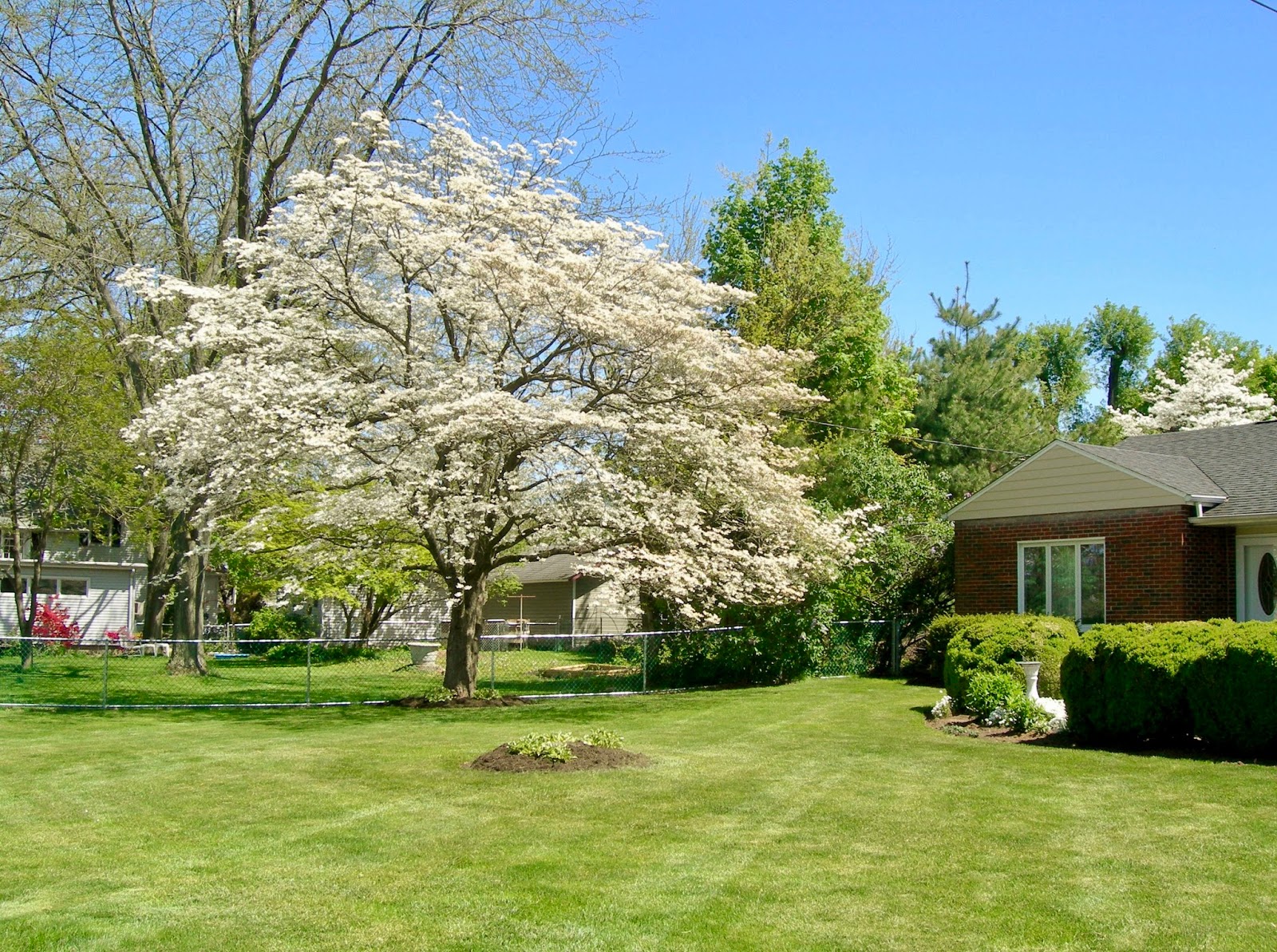
In April 2016 I wrote about my “sick” dogwood tree in the front lawn. “Shall I leave the dogwood tree one more year?  Why not?  Who knows, it just might get well if given proper care and attention.  Then, again, it may not.  We are often in a hurry to cut off a relationship gone sour, or a dogwood tree that has become sick.  Perhaps waiting and giving it (a relationship or a tree) a chance, it will bring about healing and health.”

Unfortunately the dogwood tree, infected by a blight, continued to deteriorate.  There wasn’t much I could do to bring it back to health.  A week ago I had the dogwood tree cut down!  Next spring will not be the same without its blossoms.  Now I must plant another laurel shrub to fill the gap the dogwood tree has left along the fence row.  Sometimes patient waiting doesn’t pay off.  Sometimes we just have to let things go.

“Letting go” is hard to do, whether it be letting go of a tree, a relationship, or a dream.  I suppose we all ask at one time or another, “Do I let go or do I hold on?”  Sometimes our heart wants to hold on, even when our mind says let go.  Ann Landers once wrote, “Some people believe holding on and hanging in there are signs of great strength.  However, there are times when it takes more strength to know when to let go and then do it.”  


2016

Monday, October 16, 2017

Worry Beads

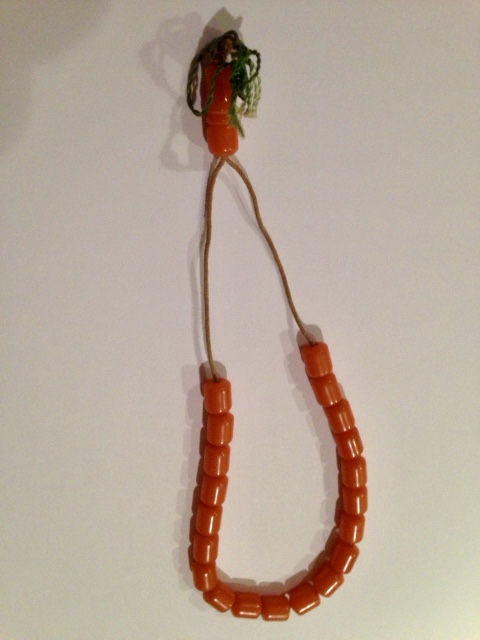
“A long time ago in a galaxy far, far away” (1960-1962) I witnessed an amazing phenomena on the Island of Crete.  I saw grown Greek men playing with beads as they sat sipping their coffee in tavernas along the streets in towns and villages all across the island. Never had I seen anything like it before.  Some of the men played with great flourish, flipping the beads and making them click against one another.  At first, I thought these beads were some kind of rosary or prayer rope, but then I learned that they had no religious purpose at all.  They were called worry beads and back then, used only by men.  The komboloi is a string of amber beads manipulated with one or two hands and used to pass the time, or just to keep your hands busy—it is a matter of worrying beads.  

In 1998, on the island of Nafplion, the Evangelinos’ family established the first and only Komboloi Museum in the world with the goal of spreading the knowledge and history of the traditional Greek komboloi.

My worry beads are now over fifty-five years old (and if they could speak, they could tell you a story of a lot of worries that have come and gone).  The amber beads have colored with age and the string is a bit frayed, but still, on occasion, I’ll take them out of my desk drawer and practice my “worrying” skills.  

Komboloi can be purchased online if you’d like to give the beads a whirl, a click, or a flip.  It is a good way of letting go of stress and worries.  I think I’m going to pull my old worry beads out of the desk drawer this morning and practice a bit.  Maybe it will help me deal with my frustrations with politics, religion, and all the other “stressors” I deal with every day.  


Sunday, October 15, 2017

New Beginnings

My solo trip ended yesterday when I arrived home safe and sound after five days on the road again.  Odysseus (my adventurous RV) carried me nearly 1,900 miles across western Maryland, West Virginia, Kentucky, Tennessee, and Virginia.  The fall scenery was spectacular.  My visit with my grandson Austin at his college, with Mark and Norva in their peaceful valley home in West Virginia, and with Bill and Patience in Paducah, Kentucky were special moments.  I return home with a deep sense of gratitude for the gift of grandchildren and special long-time friends.

Carl Sandburg ends his poem “Falltime” with this line: “Is there something finished? And some new beginning on the way?”  Yes, my solo road trip may be finished, but there are some new “beginnings” on the way. My wife and granddaughter have been busy sewing a wedding dress while I’ve been away, preparing for Katie and Liam’s wedding day at the end of this month—a new beginning.  Excitement will fill the days ahead as we anticipate and prepare for this special moment in time.  

Autumn seems to ask with Sandburg, “Is there something finished?  And some new beginning on the way?”  These questions seem to speak to me this morning of our human journey—and the journey itself gives answers to the questions.  Yes, there are “finished” things—there are “endings” to the various chapters of life (childhood, adolescence, young adulthood, middle age, etc.) but always coming are the “new beginnings.”  The “Hymn of Promise” speaks to me of this wondrous mystery.

In the bulb there is a flower, in the seed, an apple tree;
in cocoons a hidden promise: butterflies will soon be free!
In the cold and snow of winter there’s a spring that waits to be,
unrevealed until its season, something God alone can see.

There’s a song in every silence, seeking word and melody;
there’s a dawn in every darkness, bringing hope to you and me.
From the past will come the future; what it holds, a mystery,

unrevealed until its season, something God alone can see.

Snowdonia, Wales


Friday, October 13, 2017

A Different Path

I’m now on my way home after enjoying a day and a half with my friend Bill in Paducah, Kentucky, a brief visit with my friend Mark in West Virginia.  It didn’t make much sense to retrace the same roads by which I traveled to Paducah, so I am returning home another way.  This morning I left Paducah and traveled southeast on I-24 to Nashville, TN, and then I-40 across Tennessee to I-81 into Virginia.  Tomorrow I’ll continue on I-81 and eventually reach home in the late afternoon.

As I drove through Tennessee today I realized that I could have retraced my path because the return trip would be seen and felt differently than it was the first time. Heraclitus was right when he said, “No man ever steps into the same river twice, for it’s not the same river and he’s not the same man.”  I could have retraced my journey—through Kentucky and West Virginia. I would not have found it the same as it was the first time around.  The foliage in West Virginia is probably more colorful now than it was a few days ago, and I would probably see things I didn’t see on the original trip. It would also be different because I’m not the same fellow who drove those highways a few days ago.  I’ve gained some new insights, some new thoughts, some new feelings while visiting my friends—I’m not the same person I was a few days ago.   


The most important reason for going from one place to another is to see what’s in between and to be changed and to grow from the experience.  I could have gone home the way I had come—but I chose to take a different path and have enjoyed it so far.  


Thursday, October 12, 2017

On The Road

Early this morning, while still a bit dark,  I left my friend Mark’s home traveling some very narrow West Virginia Mountain roads.  For the first few miles the road was empty of cars or trucks, but there was traffic of another kind.  I must have seen at least 30 deer in the road, along side the road, jumping across the road, or just gawking at me for being on the road and intruding into their space.  

I love traveling through the eastern mountains at any time of the day or year, but particularly in the early morning and in autumn.  To see the wisps of the mist (fog) in the crevices of the multi-colored hills is a real treat.  It almost makes one think that the clouds in the sky of yesterday have descended overnight to nestle, rest and sleep among the hills.  This sight always reminds me of my college years in West Virginia.  The gift of connection with relatives and friends is not the only gift given to the wanderer—for on the road, the wanderer is also given the gift of remembrance.

After a very long day on the road, I arrived in Paducah, Kentucky, to visit my friend Bill for a day or so.  Bill has a nice little space behind his studio reserved just for Odysseus and me—though he did say that the same space is also where he sets the garbage cans for pick up every Friday morning.  


Tired, though I was from the long drive of the day, I enjoyed a wonderful pasta dinner prepared by Bill—and of course, it only took a moment and a sip of wine for the two of us to pick up our conversation from where we left it the last time we were together.  I am grateful for the gift of friends while on the road, and while it is day.


The Wanderer

There is a “tonic” that helps with everything and anything that may ail you—or at least the tonic works for me—and that is to be on the road a’traveling. My first stop today was to visit and have lunch with my grandson, Austin, at his college in western Maryland.  I had promised a “visit and lunch” last year, but we were never able to make it happen.  I was determined to make it happen this year (after all, Austin isn’t going to be in college much longer!)

After an extended and very enjoyable lunch with Austin, I was on the road again, heading for my friend Mark’s home in “wild and wonderful West Virginia.”  The fall foliage is beautiful just now.  By late afternoon I had Odysseus (minature RV) parked in Mark’s driveway. We had a great visit together over dinner and on into the evening.


I am grateful for this day, for grandson Austin, and for my friends, Mark and Norva.  I am a happy wanderer—but a wanderer with purpose.  To connect with each other, whether grandson or friend, is one of the most important things we can do, both for ourselves and hopefully, for them.

Austin (R) & Nick (L) 2017

Austin (R) & Nick (L) "away back when..."