Thursday, May 7, 2020

Beware of The Doublespeak


“As societies grow decadent, the language grows decadent, too.  Words are used to disguise, not to illuminate, action:  you liberate a city by destroying it.  Words are to confuse, so that at election time people will solemnly vote against their own interests.”  (Gore Vidal) 


“I just want you to know that, when we talk about war, we're really talking about peace.” (George W. Bush)


The word Doublespeak refers to language “that deliberately obscures, disguises, distorts, or reverses the meaning of words.”  Doublespeak often takes the form of euphemisms, such as using the word “downsizing” for layoffs.  “Social distancing” may be considered a euphemism. This form of doublespeak attempts to make the truth more palatable.  Doublespeak is usually an attempt to disguise the nature of the truth.

Secretary of State Mike Pompeo claimed that there was “enormous evidence” that the coronavirus originated from a Chinese lab in Wuhan.  The US intelligence community is looking into it, but leans toward the likelihood that the virus outbreak came into human contact at a “wet market.”  Intelligence allies from around the world have reported that it is “highly unlikely” the virus originated in a lab.  Dr. Fauci has cast doubts on the theory that the virus originated in a lab.  The Chairman of the Joint Chiefs, Gen. Mark Milley, says the evidence that the virus began in a lab is “inconclusive.”  The US intelligence community “concurs with the wide scientific consensus that the COVID-19 virus was not manmade or genetically modified.”

However, Pompeo insisted yesterday, that “there is significant evidence that this came from the laboratory”…but…he says, “We don’t have certainty.”  Pompeo says both of these statements (“We don’t have certainty”—“there is significant evidence that this came from the laboratory”) can be true. Pompeo went on to say,  “I’ve made them both…They’re all true,” he said.  What’s true?  Lack of certainty?  “Enormous evidence” or “significant evidence” that the virus came from a lab? This is doublespeak and it is misinformation (false and inaccurate information), and disinformation (deception).

The National Council of Teachers of English (NCTE) named Donald Trump winner of The Doublespeak Award in 2019…”For perpetuating language that is grossly deceptive, evasive, euphemistic, confusing, and self-centered.”  The deadline for this year’s nominations for the Doublespeak Award is September 2020.  I think I’ll nominate Mr. Pompeo.
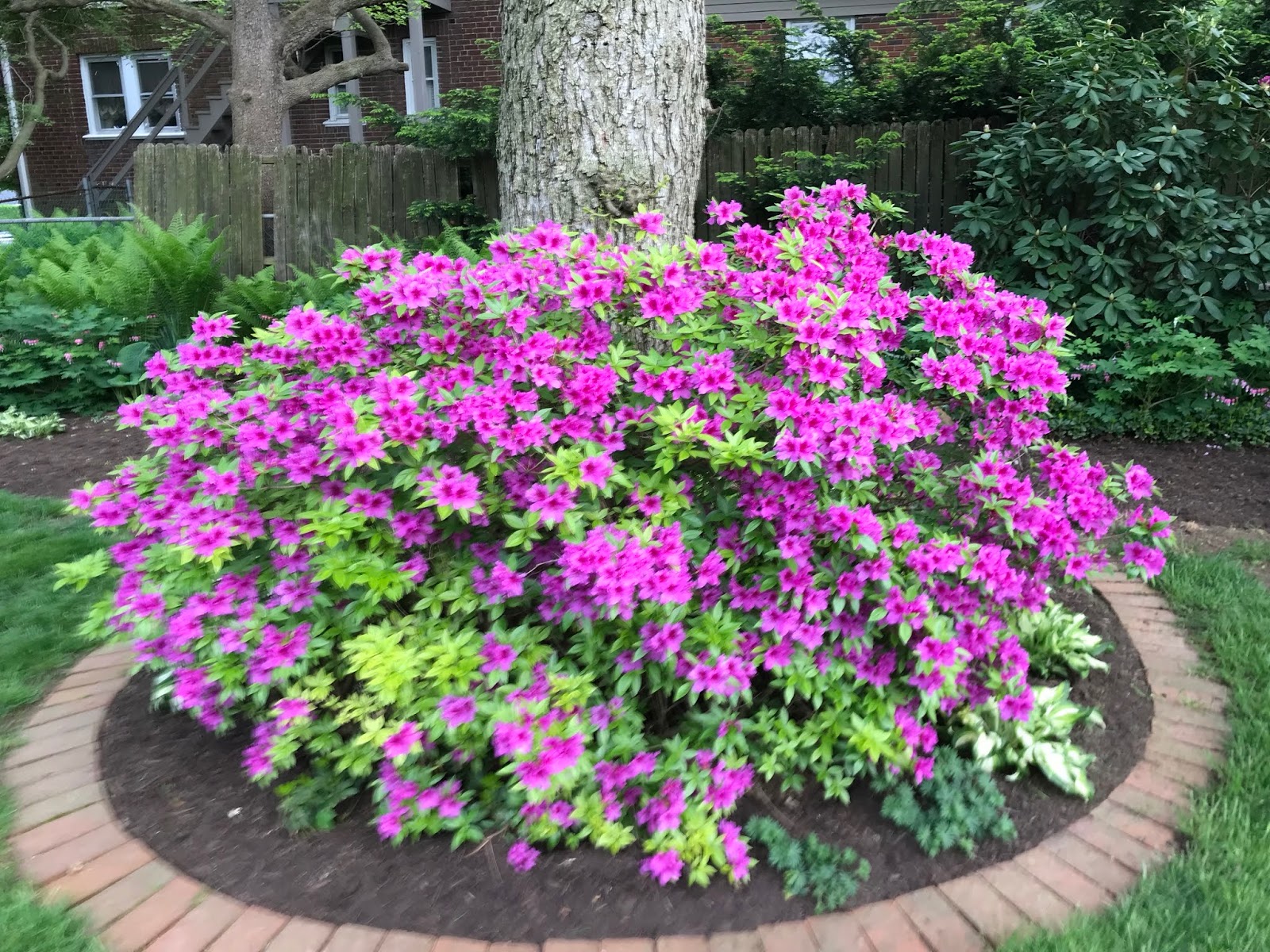
The azalea blooms...


Wednesday, May 6, 2020

America’s Gullibility

A gullible person or society is one “easily persuaded to believe something; easily deceived.” Synonyms for “gullible” include “naive, exploitable, and dupable.”  If you are gullible, you are easily fooled.  The word gullible is derived from the verb gull, which means “to swallow.”  A  gullible person is an overly trusting person (or group) who tends to swallow whole the stories he or she hears.  Gull can be used as a noun, “don’t be such a gull!” or as a verb, “you can’t gull me into believing that!” Wikipedia defines gullibility as a “failure of social intelligence in which a person is easily tricked or manipulated into an ill-advised course of action.  It is closely related to credulity, which is the tendency to believe unlikely propositions that are unsupported by evidence.”

A charlatan is a person “who practices quackery or some similar confidence trick or deception in order to obtain money, fame or other advantages via some form of pretense or deception.”  Synonyms for the word charlatan, include:  “quack, shyster, faker, fraud, imposter, hoaxer, deceiver, mountebank,  and con man.

If you are convinced the Coronavirus is a hoax, or that it is contained, or that the virus can be minimized with hydroxychloroquine, or that Bill Gates is responsible for it, or that it is just the flu—you have been “gulled” and become a victim of charlatans.  “Don’t  allow yourself to be such a gull!”  

“Man, once surrendering his reason, has no remaining guard against absurdities the most monstrous, and like a ship without a rudder, is the sport of every wind.  With such persons, gullibility which they call faith, takes the helm from the hand of reason, and the mind becomes a wreck” (Thomas Jefferson). 

“Gullibility is a knife at the throat of civilization” (David Wong).

“Faith never means gullibility.  The man who believes everything is as far from God as the man who refuses to believe anything” (Aiden Wilson Tozer).

“Extreme skepticism and extreme gullibility are two equal ways of not having to think at all.  And I don’t think I’m the first to say that” (Neil deGrasse Tyson).

“On the other hand, if you are open to the point of gullibility and have not an ounce of skeptical sense in you, then you cannot distinguish useful ideas from the worthless ones” (Carl Sagan).

“Do not be so open-minded that your brains fall out.” (G.K. Chesterton)


Friday, May 1, 2020

The Silence Still Disturbs Me

I wrote in 2016:

“What a tragedy it is, in this multimedia world, to hear only noisy presumptions, the perversion of facts, and the demagoguery of the presumptive nominee for the presidency of The United States.  I know I’m a real “sleaze” for rebelling against it, a protester that some may want to “punch in the face.”  I’m sorry.  I do not want to offend.  I only want to be “free” to speak—and no matter how hard I have tried not to speak about this present situation, I find myself compelled to do so.”

The great tragedy of this present moment is not the noisy presumptions, the public degradation of persons, the racial innuendos, or even the disdain toward our justice system and the international community by a very rich, narcissistic, reality show host, but the appalling silence of the media to correct, investigate and challenge, the silence of the church, synagogue and mosque, and the public.  Someday we may have to repent not only for the diabolical and vitriolic rhetoric of the presumptive nominee, but also for our own crippling apathy and the silence that attends it…..”

That was what I wrote three and a half years ago.  The presumptive nominee became the forty-fifth President of the United States, not by an overwhelming majority of the popular vote, but via the electoral college.  He has since been impeached by the House of Representatives and  acquitted by the Republican majority in the Senate.  The presumptions, the perversion of facts, the degradation of persons, the racial innuendos, the disdain for the judicial system and the international community has not abated, not even in this time of a global pandemic.  Nor has the silence been broken!

The “lies” are now “fact.”  The degradation of persons has been accepted as okay and normal.  The racial innuendoes have become acceptable without retaliation or argument.  Certain media outlets are now actually seen as “fake news,” not on the basis of fact, but by the public demeaning of those media representatives. The justice system has become the trumpeter and defender of aberration rather than justice.  In a time when the world needs to unite to do battle with a pandemic, when the grief-stricken of a nation and world need a comforter, when fact and truth are essential, we have "a whining victim” in the White House.  A person who cannot focus on anything or anyone other than himself.  

And still—after three and a half years, after a partisan impeachment and a partisan acquittal, (and the vindictiveness that followed), after years of reading, listening and hearing (and being told that whatever it is you are reading, listening and hearing—isn’t true),  and after weeks of bizarre briefings (now designated as “enemy” media briefings) aired worldwide—the silence continues. It really does disturb me.  

“I will build a great wall — and nobody builds walls better than me, believe me — 
and I’ll build them very inexpensively.  I will build a great, great wall on our southern border, 
and I will make Mexico pay for that wall.  Mark my words” (DJT).  


Tuesday, April 28, 2020

Will Faith See Us Through?

A friend, aware of our present situation, wrote recently, “I’m thinking your faith is helping you through.” I immediately thought of Ray Price’s song, “Faith,” which I’ve been listening to for over 60 years: 

You must have faith/In everything you do/Faith will help you find the way/Faith will see you through/Faith can move mountains/And change the tides of the sea/You can follow this guiding light/Wherever you may be/Like the darkness that comes at the end of the day/There must be an end to the night/And from the depths of your darkest moment/Faith will show you the light/Yes, you must have faith/In everything you do/Faith will help you find the way/Faith will see you through.”

“Yes,” I responded, “Our faith is a strength and a comfort for us.  We know that we are in the company of Another who will never forsake or leave us, who is with us in this time as in all other times to carry us through.  Yes, our faith is helping us through.”

Sometimes we have faith and sometimes we don’t.  Sometimes we sense God is present and Love is at the heart of all things.  Then something catastrophic comes along, or some grim fact of life comes knocking at our door, and this faith of ours wilts and withers like a wild flower cut from its roots.  The dark clouds blanket our bewildered and frightened minds and we can’t think, or feel, or see Love anywhere.  Life’s perplexities and our frustration with them cause us to scapegoat this Love at the heart of things as being the culprit, the one who has ordained the calamities.  If there is a God, if Love is there, how can this stuff be happening in our world and in our lives?

In our hurt, sadness, and utter frustration we rail against these ills of life, and against Love’s mismanagement of things.  We sometimes even suggest that all this silliness about Love at the heart of things should be abandoned as a wasteful quest.  Perhaps, we even say, it would be better to go it on our own than spend our time waiting around for Love to Love.

We forget, as life tumbles in on us, that Love by its very nature, does not coerce.  Love does not bully.  Love does not control or make things go its way.  Love loves irrespective of merit.  If Love is at the heart of all things, and Love is God, then we have painted an erroneous image of God as One who steps in to give or to remove our suffering, who steps in to give or to take away our hurt and distress.  Such control, coercion, and domination would take away our humanness, our freedom—and I just don’t believe that is what Love is.

Love does not force things upon us.  Love does not bring viruses, or disease, or suffering, nor does Love take these things away from some and not from others.  Love does not abandon us and does not remain aloof in our anguish and perplexities.  Love, rather, sits with us and feels what we feel.  Love wraps us in an embrace and holds us and weeps and hurts with us.  Love shares our burdens and calls us to love others like that too.  Yes, faith—faith in the Love at the heart of things—will see us through.

"Caring is the best thing in the world;
Caring is all that matters;
Christianity taught us to care."
(von Hugel)


Monday, April 27, 2020

“Where Do We Go From Here”

We are probably all asking the question in these stay-at-home and social distancing days, “Where do we go from here.”  NY Governor Cuomo says we can’t  go back to where or how we were.  We must reimagine the world and make it a new and better one based on what we’ve learned in this terrible pandemic.  President Trump says we will go back to where we were and it will be even better and greater than it was before.  Where do we go from here?

The question is always there, lurking in the deep caverns of our minds. It emerges whenever times get tough, when life tumbles in on us in all its myriad ways.  The loss of a loved one begs the question.  The sudden diagnosis of cancer, or Parkinson or Alzheimer’s disease will bring it forth.  Where do we go from here?  

Jim Reeves sang:  “Where do I go from here? / What fate is drawing near?”  The first question leads into the second question, into the unknown, into the tomorrows we cannot yet see, into whatever will be will be: “What fate is drawing near?” Reeves’ sings on,  “Through the grace of God alone / I’ll cast aside these fears I’ve known / And lift myself from / The depths of deep despair.” / … / Give me strength that I might find / Abiding faith and peace of mind / And I won’t ask / Where do I go from here?” We all yearn for that grace, for that strength, for that abiding faith and peace of mind so we won’t have to ask ever again, “Where do I go from here?”  But the question never seems to go away for the “here,” the “moment,” the “situation” reappears with each new and passing day.

Disney’s Pocahontas sings, “So many voices ringing in my ear / Which is the voice that I was meant to hear? / How will I know? / Where do I go from here? / … / The path ahead’s so hard to see / It winds and bends but where it ends / Depends on only me.”  It does, in fact, depend largely upon us as to where we will go from here.  The choice is always ours.  It is our responsibility to sort out the many voices ringing in our ears and find the Voice we are meant to hear.

Elvis Presley adds to the chorus and asks the same question in his song:  “Tell me where, where does a fool go when he knows there’s something missing / Tell me where, where will I go from here / Where will I go from here.”

Another group joins in:  “Where do I go? / Every direction seems to be against the flow/ … / Lost in confusion  / I feel like I’m losing it all / Where do I go from here? /… / Nothing is clear / Where do I go from here?”

Where do I go from here?  Where do we go from here?  It’s a big question yet to be answered.  Thus, as Rilke reminds us, “Live the questions now.  Perhaps then, someday far in the future, you will gradually, without even noticing it, live your way into the answer.”

“In the days ahead we must not consider it unpatriotic
 to raise certain basic questions about our national character.”


Sunday, April 26, 2020

"My Way"

Fifty years ago (1969) Frank Sinatra first sang “My Way.”   Paul Anka wrote the lyrics and he wrote them for his “hero,” Francis Albert Sinatra.  The song represents a particular idea of American individualism—it’s all about me, me, me, and me!  The song was played at the inaugural ball for President Trump and has become in some ways a “chest-thumping” American anthem.  Even Sinatra found the song a little much; too much, he said, about me, me, me, and me.  I’ve teasingly suggested to my wife that the song be played at my funeral.  After all, according to a poll of funeral directors, the song was named the most-played song at funerals a few years ago.

The song portrays an aging protagonist (Sinatra had been around for a long time in 1969) reflecting on his life and its achievements:

 “I’ll state my case, of which I am certain/I’ve lived a life that’s full/I traveled each and every highway/And more, much more/I did it, I did it my way/Regrets, I’ve had a few/But then again, too few to mention/I did what I had to do/And saw it through without exemption/I planned each charted course/Each careful step along the byway/And more, much, much more/I did it, I did it my way/Yes, there were times, I’m sure you knew/When I bit off more than I could chew/And through it all, whenever there was doubt/I ate it up and spit it out/I faced it all and I stood tall/And did it, did it my way/I’ve loved, laughed and cried/I’ve had my fill my share of losing/And now, as tears subside/I find that it’s all so amusing/And to think I did all that/And may I say not in a shy way/No, no, not me/I did it my way/For what is a man, what has he got/If not himself, then he has naught/Not to say the things that he truly feels/And not the words of someone who kneels/The record shows I took all the blows/And did it my way.”

Last April, circumstances were such that I was unable to do the annual mulching of my flowerbeds.  So I hired a couple of fellows to do it for me.  Before they even began the work, one of them told me, “Now remember, we probably won’t do it the way you would do it.”  He was right—they didn’t do it my way—even though they did a decent and acceptable job.

This spring, in the midst of the coronavirus pandemic and the stay-at-home requirements, I was able to do the mulching my way.  Three loads of mulch were delivered following social distancing guidelines.  The flowerbeds were carefully edged and prepared my way, and the three loads of mulch were distributed my way, and the task was completed yesterday my way.

This morning this protagonist looks out the window upon his finished work.  The sore muscles, the aching back now forgotten, and sings….   
“Yes, there were times, I’m sure you knew
When I bit off more than I could chew…
I ate it up and spit it out
I faced it all and I stood tall
And did it, I did it my way.”

"There isn't a parallel of latitude but thinks it
would have been the equator if it had had
its rights." (Mark Twain)

Saturday, April 25, 2020

A New Way to Coddiwomple

Odysseus (our mini-motor home, still winterized) is parked in our driveway—probably wondering why we aren’t “on the road again.”  After all, it is April.  The reason, of course, is that we are in a “stay-at-home” mode to curb the spread of the coronavirus. I see myself as a “Coddiwompler,” a gypsy, a pilgrim, a wanderer, forever yearning to be like Willie Nelson—“On the Road Again.”  “Coddiwomple, (v) means to travel in a purposeful manner towards a vague destination.”  Can I coddiwomple in some other way in this “stay-at-home” time?  This morning I reviewed our travel journals and how we have lived out the month of April over the past ten years.  What a trip it has been!

In April 2010 we made a cross-country trip in Odysseus going south to Florida and then westward (visiting Big Bend, Grand Canyon, Bryce, Zion, and Mesa Verde National Parks) to Monterey, CA, enjoying visits with family and friends all along the way.

April 2011 we were on the road—traveling across country via another and different route to Monterey, CA.  (We visited Joshua Tree, Carlsbad, Petrified Forest, Montezuma, Death Valley National Parks, Sedona, and the Hoover Dam).

In April 2012 we were on the road in Odysseus, visiting my mother and enjoying some time with family in NJ.  (We did an earlier cross-country trek in February and March 2012 to California).

The first two weeks of April 2013 were spent in The Netherlands and Belgium and later in that same month a visit with my mother in NJ.  

April 2014 we visited our granddaughter, Katie, in Grenoble, France, visiting Geneva, Nice, the French Riviera, Monaco, Lyon, all under the magnificent shadow of the French Alps.

Then, in April 2015 we were again with Katie, but this time in Bangor, Wales, and in Yorkshire, England.  We attended Easter worship at YorkMinster.  What a treat that was!  After leaving Katie we cruised the Elbe River in Germany.

In April 2016 Odysseus took us on another cross-country trip, which included Pigeon Forge, Nashville, and Memphis, TN, Monument Valley, the Valley of the Gods, and so many other wonderful places between home and Monterey, CA.

April 2017 we went on a journey to the Greek Isles with my brother and sister and their spouses.  We missed a “coddiwopple” in  April 2018—but in June we visited our Katie and Liam in the UK and then took a cruise on the Baltic Sea. (My brother and his wife joining us).

Last year, April 2019, we took a spring jaunt to New York (West Point Academy, Hyde Park) and visited with family in New Jersey.  

This year, April 2020, we coddiwomple still—through the  cherished memories of April trips of the past,  and a visit, just yesterday via FaceTime, with our granddaughter Katie, her husband, Liam, and our great granddaughter, Elodie, in the UK, and on Easter Sunday we visited Luke, Kim, Ethan and Elenie in Flagstaff, AZ in the same way.  A new way to coddiwomple in this “stay-at-home” time.